Sunday, July 3, 2016

CAP-A-LAIGLE TO TADOUSSAC - July 1 & 2, 2016


Happy Canada Day to everyone. 
Cruising down the great St. Lawrence River: what a terrific way to celebrate Canada.

We found Cap-a-l’Aigle to be a terrific stop between Quebec City and Tadoussac. The small harbour was well protected. The people were very welcoming and friendly. The washrooms and showers were new and well appointed. Finally, there was a great little restaurant over the marina office that put on a great lunch. Afterwards, we took a nap, as we were all tired from our 0230 start to the day. Later in the day, at a crew meeting to discuss the July 1st cruise to Tadoussac, we determined it would be another early morning to follow the advice in our cruising guide, so we were off to bed very early.

Cap-a-l'Aigle Marina

Low tide = steep incline to ramp at Cap-a-l'Aigle

It is a 40 nautical mile cruise to Tadoussac and our cruising guide said we should arrive at the Prince Shoal Lighthouse (entrance to the Saguenay Fiord) two hours after low tide at the nearby Pointe-au-Pere tidal station on the south shore of the St. Lawrence (we’d need to arrive at 0824). This meant we’d need to depart at 0430 hours to make it on time. We awoke at 0400 to a sky that was already quite bright and we were off the dock by 0430 to see the sun rise at 0445 over the horizon on the endless ribbon of water of the St. Lawrence River. It was a spectacular morning with clear, dry air, with good warmth to the sun matched by a chill from the 11 degree C water. We enjoyed speeds of 9 to 12 knots over the ground, thanks to the ebb tide. 

Along the way we saw two belugas and had multiple minke whale sightings and had to slow down and occasionally stop while the whales made their way by us. Such a thrill! We also saw a grey seal and puffins. 

Lighthouse along north shore of St. Lawrence

A few miles before we reached Prince Shoal Lighthouse, the St. Lawrence flood tide began and our speed dropped dramatically to 5.5 knots, but as we completed our turn right on time into the Saguenay Fiord, our speed picked up to 8 to 9 knots as we took advantage of the flood tide into the fiord. It was a short run in to the town of Tadoussac where we were greeted by an enthusiastic marina employee named Alex. The docking space is limited and he sure knew how to pack the boats in. 

Prince Shoal Lighthouse & Saguenay Fiord


Tadoussac was much more than we expected. The village is nestled into a lovely horseshoe shaped bay with a tree covered hill all around. Two churches and the Hotel Tadoussac, with its bright red roof are the dominant landmarks of the town. The Tadoussac marina is on the northwest corner of the bay and the balance of the bay is rimmed with a lovely sand beach that grows dramatically during low tide.

Club Nautique de Tadoussac


Jacques Cartier came to the site in 1535 and found Innu people using it as a base for hunting seal. Later the Basques form Spain conducted whaling expeditions on the river. Tadoussac was established at an Innu settlement and in 1600 it became France’s first trading post on the mainland of New France. It is the oldest continuously inhabited European settlement in Canada and the oldest surviving French settlement in the Americas. The frontier was harsh and only five of the sixteen men survived the first winter. By the late 17th century, Tadoussac was the centre of fur trade between the French and First Nations peoples. Colonists from the Tadoussac area were also involved in whaling from 1632 until the end of the century. 

In the 19th century, industrialization reached other parts of Canada and tourists discovered the appeal of this rural village. Wealthy Quebecois built vacation villas. In 1864 a Victorian hotel was built and later it was lost to a fire. In the 1940k’s it was replaced by the large Hotel Tadoussac. Today it continues to be a major tourist destination because of the rugged beauty of the Saguenay fiord and its facilities for whale watching. 

Between May and October up to 13 species of cetaceans, including blue whales and humpbacks, are found in the salty waters of the St. Lawrence and Saguenay fiord as they come to feed on the food rich supply stirred up by the mixing of the St. Lawrence and Saguenay rivers. In 1970 the Quebec government began acquiring land around the fiord to protect it. In 1983 the Saguenay National Park was officially created. Guidelines were established for the whale watching industry and for recreational boaters, to protect the whales and to educate the public on the whales and their habitat. 

The beluga or white whale is an Arctic and sub-attic cetacean. It is adapted to life in the Arctic, so it has different anatomical and physiological characteristics from other cetaceans. Key differences are its all-white colour, absence of a dorsal fin and a distinctive protuberance at the front of its head. This whale has a stocky body and a larger percentage of its weight is blubber. Its sense of hearing is highly developed and its sonar allows it to move about and find blowholes under sheet ice. Belugas form groups of up to 10 animals on average, but during summer they can gather in the hundreds. They are slow swimmers but can dive up to 2,300 feed below the surface. they have teeth and mainly eat fish, crustaceans and other deep-sea invertebrates. The majority of belugas live in the Arctic. Belugas stay in their cold water environment year round rather than migrate to warm waters for birthing as other whale species do.

The St. Lawrence River and Saguenay fiord are home to an important population of belugas. In the 1800’s there were as many as 10,000 belugas in this area. Whaling operations almost eliminated this beluga population. The whaling ban in 1979 in this area was made with the hope of helping to restore the population of belugas and initially the population did start to increase to about 1,000.  Now however, the population is estimated at just under 900 and falling. The worst year for dead calves was 2012 when sixteen were found dead. Whales were found to be dying of cancer at an unusually high rate in recent years. At this point researchers advise the reasons are unclear. 

After docking, we searched our Yelp app to find a restaurant for lunch as we continue to eat our way through Quebec. We settled on Cafe Boheme which turned out to be a gem. After, we visited the Tadoussac Whale Museum & Research Centre and watched a film about the research work being done. There was also a great display of whale bones and complete skeletons that helped one gain an appreciation for their size. Later, Fran and I did the boardwalk hike around Point de I’Islet taking in the stunning vistas of the mouth of the Saguenay and views up the fiord.

The Saguenay Fiord


There were no real Canada Day celebrations in Tadoussac. It seems to vary by community. Last weekend’s Saint-Jean-Baptiste day is a more prominent celebration in Quebec.

Hotel Tadoussac


Fran with whale museum in background

The forecast for Saturday July 2nd included that bright red banner “Gale Force Winds”. We woke to a cloudy drizzly morning. but shortly after, the sun shone and the winds were light, with the promise of more sun, cloud and rain through the day. The forecast did prove to be right as by early afternoon, a wind shift had 20 to 35 knot winds going straight through the harbour and boaters were regularly adding fenders and tending to their dock lines to ensure their boats were safe. 

Boat Chores: This is a regular part of boating. This includes keeping the exterior decks, cabin and hull clean, engine room checks (oil level, strainers clear of weeds, engine belts ok, a look under the main engine for any sign of leaks etc.). Then there are other “to do” items. In my case, one long outstanding one was to splice a nylon line (rope) onto our all chain anchor rode to lengthen it in case we need to anchor in deeper water than normal. We carry 175 feet of chain for our anchor and that’s all we’ve used or needed in the 7 seasons we’ve had Tug’n. But there is a real possibility we’ll need to anchor in deeper waters, so we purchased 150’ of 5/8” three strand nylon anchor line that I’d planned to splice onto the end of our anchor chain. Today was the perfect day to do that. I reviewed the instructions I’d saved onto iBooks on my iPad and then set about completing the splice. I’m sure it had been 8 years or more since I’d done a splice of this sort, but it worked out perfectly. 

The rope to chain splice

Later, we enjoyed a lovely lunch in the marina restaurant while listening to a fantastic playlist from the sixties (Bob Dylan, Joni Mitchell, Cat Stevens etc - my kind of music). A marina staff member spent time with me discussing what we should see when we head up the Saguenay fiord and where we should consider staying. Except for the high winds, it was a very relaxing day.

Lunch at the terrific marina restaurant

Thursday, June 30, 2016

QUEBEC CITY TO CAP-A-L'AIGLE - June 30, 2016

It is a two day, 110 nautical mile trip from Quebec City to Tadoussac and tide planning is crucial for pleasure craft. Our cruising guide recommending departing two hours prior to high tide at Quebec City to make the 70 mile run to Cap-a-l’Aigle, and that it is mandatory that we arrive at our destination before dark. There are no places to stop in between. Our problem was that high tides for today were going to be 0303 and 1539.

Fortunately, through Bob and Jan on Wings, we met Guy and Lise off of a lovely 50’ Fantail trawler named Enchanter and another boater named Ramon. They joined us for Happy Hour and shared their extensive knowledge of these waters. After lots of discussion, their final recommendation was to depart at 0300 (right at the early high tide) to make the most of the ebb tide and minimize sections of the run where we’d be fighting the next flood tide. We toured each others boats and enjoyed some local wine together, thoroughly enjoying each other’s company. 

With our plan nailed down, after dinner, we exited the inside basin via the lock and tied up at the dock in the outside basin dock at around 2100 hours. Shortly after, we were in bed trying to get a few hours sleep before our very early departure. 

Quebec City is about to host The Transat Quebec Saint-Malo trans-Atlantic, crewed sailing race. It is the oldest west-to-east, non-stop trans-Atlantic race and it runs every four years. Its challenges include the Saint Lawrence River currents & tides, crossing the North Atlantic, avoiding icebergs and finally entering the English Channel and its dense maritime traffic and strong currents. Over the past few days and through the night, more and more monohull and tri-marins sailboats were arriving in Quebec City. 

0230 came around very quickly. It was cloudy with a drizzle and very, very dark. Shortly after heading out into the channel, we immediately faced lots of boat action. We had one unbound ship, one down bound pilot boat to drop off a pilot for the ship and two up bound, poorly lit Transat sailboats. Thank goodness for our radar and for the AIS (        ) Wings has on their boat. By 0500, all the boat excitement was over and the sky was starting to brighten, providing a much more relaxing ride. Shortly afterwards we had breakfast and then Fran has a short nap, followed by me. 

As the morning progressed, patches of blue sky began to appear, dramatically contrasting the dark clouds clinging to the hills along the north and south shores of the St. Lawrence. The ebb tide provided us up to 4 1/2 knots of “lift” to our speed for significant sections of the first 45 miles of our trip. Then, in a fairly short time span, the next flood tide started and our speed dropped form about 12 knots to 4 1/2 knots. The further we east we go from Quebec City, the wider the St. Lawrence River is getting. We are following the north shore and it won’t be long before the south shore is no longer visible. 

WHALES! Wow, were we surprised. At about 55 miles along this section, we spotted four whales. Three were the lovely white Beluga whales all following one another in a line and the fourth was an unidentified dark coloured whale. We stopped the boat and watched them swim by at a proper ~ 500 yards away. What a thrill. We had no idea we’d see whales so far upstream from the Saguenay River.

A tri-marin in the outer harbour


Sun poking through cloud cover


A mono hull delivery - tacking up the St Lawrence River
to Quebec City for the race


Lighthouse on St. Lawrence well protected
against the winter ice flows


Cruise ship heading upstream to Quebec City


Train along shore of St. Lawrence


Cap-a-l'Aigle

MONTREAL TO QUEBEC CITY (Part Two) - June 26 to 29, 2016

We continued our very leisurely pace down the St. Lawrence River to Quebec City. Saturday June 26th brought us a perfect summer morning with clear, sunny skies and the promise of hot temperatures. Local boaters recommended we delay our departure to 1300 to 1400 hours to take advantage of the ebb tide, so we took our time completing a few chores through the morning. At 1330 hours, we departed Portneuf for Neuville enjoying a relaxing ride through very scenic countryside. 

Neuville’s waterfront has a small, well protected basin for Club Nautique Vauquelin. We received a very warm welcome from this lovely yacht club. Shortly after arrival we enjoyed the use of their clubhouse for our happy hour and a game of “Cross Crib”. Afterwards we discussed the timing of our departure for Quebec City tomorrow.

At this time in the lunar cycle, tide times are rather awkward for down bound pleasure craft wanting to take advantage of ebb tides (and not fighting the flood tides). Low tide tomorrow was going to be 0730 hours so we decided on a departure time of 0600 to take advantage of the remaining ebb tide and slack tide to enter the Quebec City Marina and leave us lots of time to start exploring the city. This marina has two basins. The outer basin is exposed to the ~15 foot tide and has limited space on floating docks. The inner basin, entered via a lock, is enormous, with close to 300 slips. The lock operates from 0700 to 0030 hours each day. By 0900, we’d made it into the Quebec City inner harbour, had a pump out, filled our fuel tanks and got to our assigned slip and we were all feeling really good about that. 

Quebec City’s name comes from the descriptive Algonquin word “Kebec” meaning “where the river narrows”. French explorer Jacques Cartier built a fort at the site in 1535, but it was abandoned in 1542 due to the harsh winter living conditions and hostility of the First Nations people. Quebec City was founded by Samuel de Champlain in 1608, making it one of the oldest cities in North America. The city’s “Old Town” (Vieux-Quebec) is the only North American fortified city north of Mexico whose walls still exist. Quebec has a lengthy history of battles and ownership changing between the French and British, the French & Indian Wars, the Seven Years Wars and of course the Battle of the Plains of Abraham, which ended French rule in 1763 when France ceded New France to Britain. During British Rule, American revolutionary troops from the southern colonies assaulted the British garrison, in a failed attempt to liberate Quebec city (Battle of Quebec), dashing hopes of the people of Quebec that Canada would join the Continental Congress and become part of the original United States of America. The outcome of this battle effectively split British North America into two distinct political entities. Quebec City was never attacked during the War of 1812, when the United States attempted to annex Canadian lands. Fearing an American attack on Quebec City in the future, the British began construction of the Citadel of Quebec in 1820. The Americans never did attack Canada after the War of 1812, but the Citadel continued to house a large British garrison until 1871 and today it is still in use by the Canadian military in addition to being a tourist attraction. 


Quebec City has it all: history, wonderful old and pristinely maintained architecture, Quebec culture, restaurants, galleries, street performers, street artists and historical sites. If it weren’t for the $115 per night docking fee and the wonderful itinerary we have laid out for the rest of the summer, we could have stayed for many weeks, enjoying their various events and festivals. We are extremely grateful for the fantastic three days we had in the city. We dined out in French restaurants multiple times; we rode the narrated “get on/get off” Red Bus around the city and we soaked up as much Quebec atmosphere and culture as we could. The Quebec City Marina was walking distance to the old city and at night, the city was lit up beautifully like the jewel it is. The old city has gone through a significant renewal over the past 20 years and Quebecers are justifiably proud of this great city. It should be on everyones “Bucket List”.

Chateau Frontenac, Quebec City

Toboggan slide for Winter Carnival on boardwalk

Rue Champlain / Place Royale district

Dining out

Dining out again!!

Fran beside large wall mural in Place Royale

Artist's Alley

Battlefield Park - Plains of Abraham

Doing the board walk

Popular tin roofs with built in ladders for 
snow removal

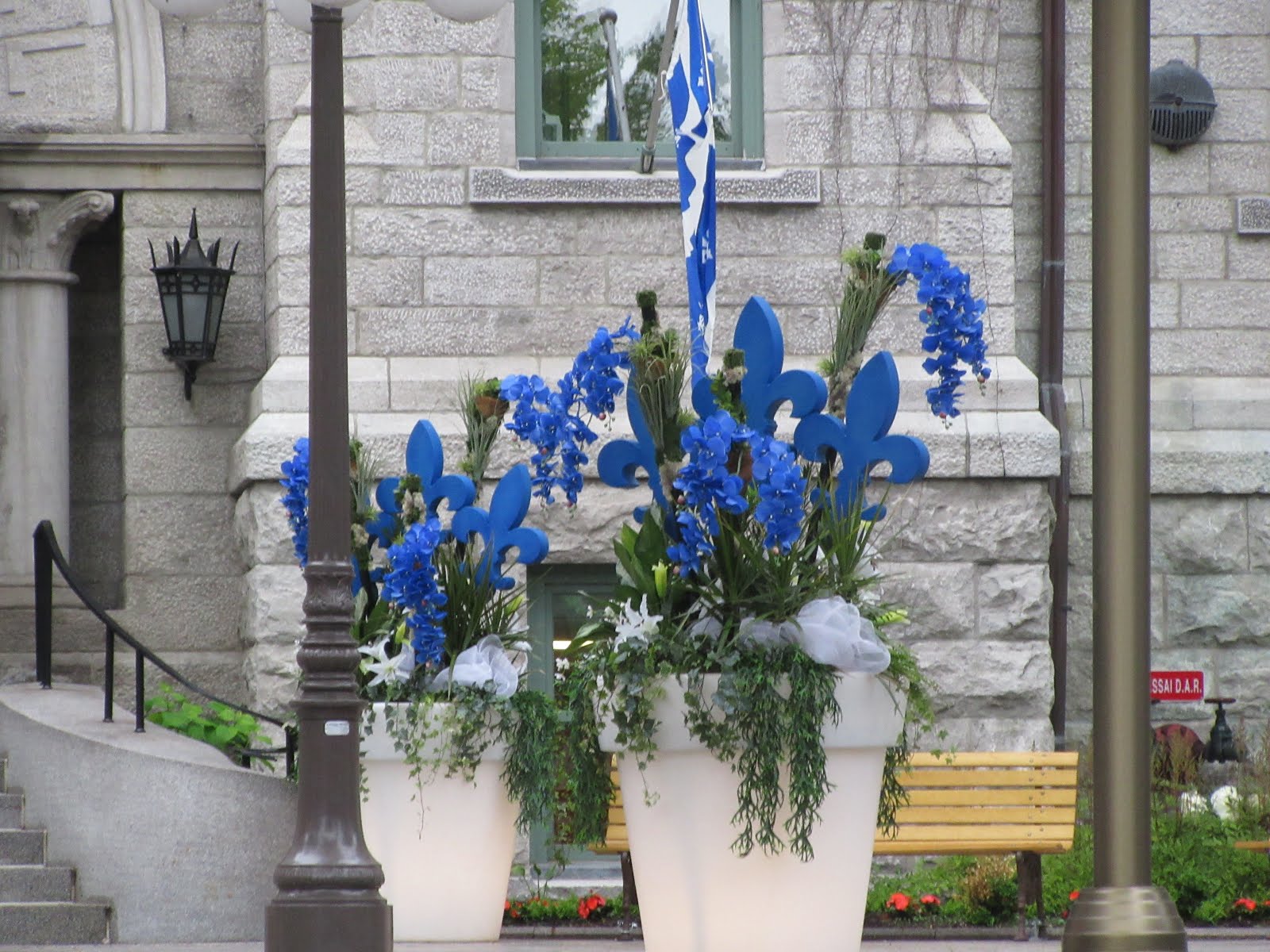
Fleur de lis at City Hall 

Sunday, June 26, 2016

MONTREAL TO QUEBEC CITY (Part One) - June 21 to 25, 2016

It is 134 nautical miles from Montreal to Quebec City. As Dave & Judy on Sir Tugley Blue are waiting in Montreal to finalize shipping arrangements for their replacement injection moulded hull for their dinghy, we and Wings decided to proceed to Quebec City at a leisurely pace. Our first leg was to the Sorel Islands, just east of Sorel, to anchor for a few days. 

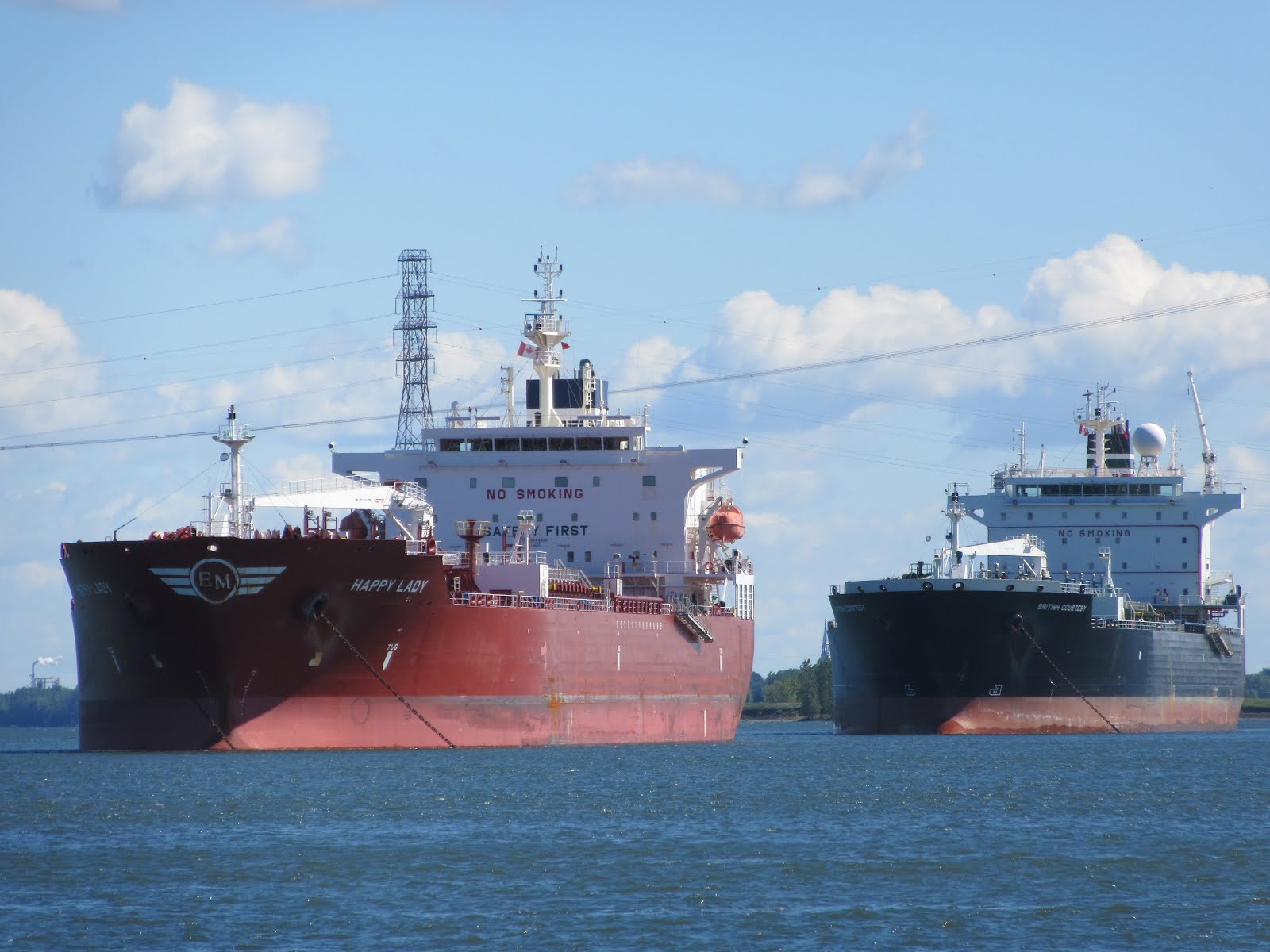
Montreal is a very busy commercial port with ship traffic from around the world. Some ships will carry on past Montreal and on up the Seaway, possibly as far as Lake Superior. Other ships are too large for the Seaway locks and offload at Montreal to other ships, trains or trucks. For us, this meant seeing many ships along our route to Quebec City. We typically travel along at 7.5 knots (nautical miles per hour) and with the favourable current of the St. Lawrence, we’ll average about 9.5 knots. The commercial ships travel around 12 to 16 knots, substantially faster than us. As a result, we get to see ships going both ways, which we found very exciting. 

On the first leg, we saw about 18 ships, all going upstream. The majority were sitting very high out of the water, indicating they were empty and heading to Montreal or beyond to pick up a load, presumably for export (Go Canada Go!). Modern ships have a large bulbous underwater bow, making their passage through the water more efficient. When a ship is empty, the bow looks so impressive and it also throws quite a wake. Even five miles after passing a ship, we were still bouncing up and down in their wake. To me, these ships look so elegant, purposeful and precise (which is good because the channel can get VERY narrow). When passing, these ships command the upmost respect and we give them as wide a birth as we possibly can. Where depths allow, we move outside the channel for maximum safety. When a ship overtakes and passes you, it can take quite a while from when you first spot them to when they pass. Radar helps you keep track of a passing ship as it approaches you from behind. You can have your radar “track” the ship, telling you its speed over the ground and when it will reach you, so you can be prepared for its passing.

Ships in the St. Lawrence


Sorel is on the south shore of the St Lawrence at the confluence of the Richelieu River and the St. Lawrence Rivers. Sorel is Canada’s 4th oldest city, being founded in 1642. It is primarily a steel and metallurgy economy. Interestingly, the Christmas Tree made its first appearance in North America at Sorel on Christmas Eve in 1781. Also, NHL star Marc-Andre Fleury (Pittsburg Penguins) was born in Sorel. Sorel however, is NOT the home of the world famous winter boots. They were introduced by Kaufman Footwear in Kitchener and the Sorel boot line is now owned by Columbia Sportswear. 

While anchored in the Sorel Islands Tuesday to Friday morning, it was very quiet until the Thursday afternoon when suddenly boat traffic started to pick up. Friday June 24th is of course St.-Jean-Baptiste day and a long weekend for Quebecers and it is locally called “The National Holiday of Quebec”. It is the celebration of the fest of the Nativity of St. John the Baptist. June 24th is also celebrated as a festival of French Canadian Culture, both in Quebec and other Canadian provinces and in the USA. In Quebec there are celebrations across the province in most communities. 

Sunrise at Sorel Islands

Our second leg from Montreal to Quebec took us to Trois-Rivieres, another commercial port on the St. Lawrence. It is named after the Saint-Maurice River, which splits into three “rivers” by a cluster of small islands at its mouth. We decided to anchor in the west branch near a popular beach where dozens & dozens of boats gathered to enjoy the sun and the beach on the holiday Friday. It proved very entertaining to boat watch and people watch while large ships silently headed up and down the St Lawrence in the distance. 

Party time at Trois-Riviere on Saint-Jean-Baptiste Day

Technically, we are now in tidal waters. The tidal range is only about 6”, so you don’t even notice it, but a lot more is coming very soon. We’ve been busy reading up on flood tide, ebb tide, stand, slack tide, tidal currents, tide tables, “playing the tide” on the St. Lawrence to optimize your passage. It is now Saturday, June 25th and today we’ll enter an area with a tidal range of about 10’. We will also pass through the Richelieu Rapids, an area that gets special mention in our Down East Circle Route cruising guide as during flood tide you can have a 5 1/2 knot current against our down bound travel and during ebb tide, you can have up to 8 knots of combined tidal + river current in our down bound travel. Our normal cruising speed is 7.5 knots, so these are rather significant currents to take into account while piloting our 14 ton boat (at least we think so anyway).

After consulting the tide tables for our Trois-Riviere to Portneuf 34 nautical mile transit, we decided to depart so we’d arrive at the Richelieu Rapids just after high tide to ensure a favourable run down the rapids. With great anticipation we headed off. You could immediately tell we are getting into high boating season. There was more boat traffic today than we’ve so far on this journey. The sun shone brightly in a cloudless sky with a very light breeze and fishermen, sailboats, speedboats and cruisers were everywhere, moving up and down the channel. For part of the journey, there was a very light river current. Then, as we approached the Richelieu Rapids, our speed began to pick up. Eight knots, then nine, ten, eleven, peaking out at 11.9 knots, suggesting we went through the rapids with about 4 1/2 knots of current. The channel narrows to about 0.25 miles wide in this section, which is the cause of the higher speed of the current. At high tide the channel looks much wider, but at low tide, there are prominent rocks showing on each side of the channel. 

Tide graph near Richelieu Rapids 

Chart plotter showing us doing 11.7 knots

Portneuf is directly off the channel at the bottom of the Richelieu Rapids and as you turn to head into the harbour you are going sideways at about the same speed you are going forward, which looks quite dramatic. After docking, we chatted with Bob and Jan on Wings, feeling quite proud of ourselves and our first transit through significant tides. There will be a lot more to come.


Portneuf has an attractive and well protected little harbour, launch ramp and park. Above the marina office is a lovely little restaurant we’d read about called La Pearle du St Laurent. It has a magnificent view of the harbour and the St. Lawrence River and we enjoyed a fantastic dinner while soaking up the view.

Dinner at Portneuf

View of the harbour and St. Lawrence

Serious tide

Tuesday, June 21, 2016

CRUISING CHALLENGES - June 18 to 20, 2016

Almost every cruise involves some sort of unexpected challenge(s). They can be mechanical, weather, health, accident or any combination. These challenges force one to repair, fix, overcome, adapt, postpone, ignore, get help from friends, pay for help, buy parts…. Often, handling such challenges involves something we’ve already covered - “Boaters Helping Boaters”.

In our cruising lives, here is a sampling of some of the issues we’ve faced:
  • alternator issues
  • electronics issues
  • a crew member / guest broke his ankle
  • I cracked two ribs
  • battery issues
  • towed one boat off a sand bar and another off the rocks

This Down East Circle Route adventure is no different. Here are the current challenges:
  • Sir Tugley Blue has a rigid inflatable dinghy like ours. A week after they left on this trip, they launched the dinghy and found the injection moulded hull on their one year old dinghy had developed a crack. They have been pushing Walker Bay hard for over a month for a replacement hull with great frustration. It now appears a new hull will be sent to Quebec City, but it is causing a delay of possibly up to two weeks
  • Wings: About 5 or 6 years ago, Bob had a hip replacement. Recently, Bob’s other hip has started to give him trouble and he has been surviving on Ibuprofen and Tylenol. Another better prescription is waiting for Bob in Quebec City that we all hope gives him more relief and better mobility
  • Tug’n: I had spent a month in late April and May installing new equipment on our boat four to five days a week in small spaces and awkward positions. By the time we were ready to leave in late May, my back was causing me some grief. A visit to a useless chiropractor in Bobcaygeon proved to be a waste of time. However, a visit to a brilliant and highly skilled chiropractor in Montreal has started me on the road to recovery.
Here’s hoping all these challenges are resolved in a timely manner with no measurable impact on our cruising plans.

Since departing Penetanguishene on Georgian Bay on May 27th, through to June 18th in Montreal, we had only anchored out twice and Fran & I were really missing the peace and tranquility of anchoring. Sir Tugley planned on staying in Montreal a further week or more while they finalized arrangements for the replacement hull for their dinghy and Wings decided they’d stay at the marina for a couple more days while a heat alert was looming for Montreal.

We spoke to local boaters and got some great tips on where they go to anchor nearby. Off we headed on Saturday mid day to Parc National des Iles-de-Boucherville. This was a short 7 nautical mile journey to a group of islands that is something like Montreal’s equivalent to the Toronto Islands, without the docks, yacht clubs and marinas. There are narrow channels between the islands and because they are in the St. Lawrence River, a current is constantly flowing through the channels. 

As it was going to be a sunny, hot weekend, boats were streaming to the islands. When we got there, the channels were lined with boats anchored on each side of the channel, either individually or rafted in groups of 2, up to 5 boats across. The current keeps the boats neatly lined up one behind the other. We meandered up a channel that had been recommended to us, weaving between the boats and found a spot to anchor Tug’n. Once secured, we enjoyed a lovely lunch in our cockpit and watched the steady flow of water craft all the rest of the day. There were cruisers, runabouts, sea doos, canoes, kayaks, paddle boats all moving up and down the channels. Most of the power boats had “bikini clad bow fluff” on display and no one seemed the least bit concerned about getting too much sun. All canvas bimini covers were stowed and everyone was out to get as much sun as possible. What entertainment. We spent the afternoon reading in our shaded cockpit and watching the boats and people. Our happy hour and dinner were also spent in the cockpit. By 2100 hours, the vast majority of boats were gone leaving only a handful of us for the night. 

The scene was repeated again on Sunday, but with slightly less traffic as it was Fathers’ Day. I got wonderful phone Fathers’ Day phone calls from Rina, Morgan and Rina and some of the grand children. While there was a heat alert in Montreal, at anchor we had a steady breeze, shade in our cockpit and periodic dips in the water. It isn’t quite like taking a swim in a lake. Here you have to be concerned about the current and not getting too far away from your boat. We followed examples of others and tied our life ring with its 50’ line to a cleat on the stern of our boat. Then we’d get in the water and hold onto the life ring and enjoy the cool water. To get some exercise, we’d move up the floating line a little and start swimming. At a modestly fast pace, you’d stay still in one place with the floating line right beside you for when you’d had enough. 

On Monday, June 21st, Bob and Jan on Wings joined us at the anchorage. Originally, we’d planned on moving further down the St. Lawrence to another anchorage, but the weather forecast made us change our minds. 

Weather is all important for boaters. We usually get the forecast a couple of times a day. Historically, we’d get the marine forecast over the VHF Radio through Weather Radio Canada. These day’s it is easier to go to Environment Canada’s web site and get the info. Below is a copy of the forecast for today. The red banner saying “Gale Force Winds” got our attention. A forecast like this forces a boater to evaluate what the impact will be and determine what preparations they should make (move or stay; put out more anchor rode; store any loose gear; have an escape plan if something unexpected happens etc).


We’d quickly concluded we were in a good location. The wind direction was going to be basically the same as what we’d had. We had some pretty good protection from the wind via the shape of the shoreline and the tall trees lining both sides of the channel. All we ended up doing was lengthening our anchor rode (chain) to a little over 5:1. This means for every foot of depth, we’d have 5 feet of chain let out to help keep our anchor well secured to the mud bottom.

Once you are feeling prepared for the weather to come, you go about your days activities and wait for the “weather” to arrive. You get period updates to the forecast. Hopefully the forecast turns out to be the worst case scenario and what you actually experience is something less. In either case, weather stories are always told and retold when you have get togethers with other boaters. Based on the fearsome stories you hear from others, it’s a wonder any of us ever heads off on a boating adventure. 


In our case today, there were indeed very high winds (although we were well protected, so for us it didn’t feel so bad), we did get thunder storms in the evening and we did get rain, but never as bad as forecast. After midnight, all was calm. A successful conclusion to three nights at anchor at Boucherville Islands!

Anchored in a narrow channel at Boucherville Islands

Fran in for a "life ring dip"

A Fathers' Day sunset

Storm clouds roll in

Sunday, June 19, 2016

MONTREAL - June 15, 16 & 17, 2016

The previous night we’d spent in Salaberry-de-Valleyfield tied to a government dock in the downtown, right beside a lovely park where a local band was providing live entertainment while we dined on filet mignon, roasted potatoes and salad. This town of 40,000 was named after Colonel Charles de Salaberry who served with the British army during the War of 1812 and Valleyfield came from the Valleyfield Mills, a paper mill south of Edinburgh in Scotland. Salaberry-de-Valleyfield is also home of Jean-Luc Brassard, the freestyle skier who won the gold metal during the 1994  Winter Olympics in the sport’s debut as a metal event. 

Today was our last leg of the journey to Montreal. We did four more locks and learned that locking in the St. Lawrence Seaway can mean lengthy delays making it hard to plan arrival times and activities. A municipal employees strike meant the main marina in Montreal’s Old Port was closed to us. After a call to fellow boaters Bernard and Monique (who live in Montreal and boat out of Beacon Bay Marina where we do) we successfully made reservations at Marina La Ronde on Isle Ste. Helene, the site of the Expo 67 Worlds Fair and a walk, bus ride, and two subway rides away from Old Montreal. Our late arrival meant the office was closed by friendly local boaters helped us get settled and helped us find the keys and passes marina staff had left.

Isle Sainte Helene was named after Samuel de Champlain’s wife and over the years it was used as a public park,  a prisoner of war camp in WWII and eventually the site for Expo 67 that was held on the theme of Man and His World. The La Ronde amusement park continues to be used for that, and much of the rest of the island is now Jean Drapeau public park.

Our time here on Thursday and Friday was spent going back and forth to Old Montreal walking the streets to enjoy the lovely architecture, tour the Nortre Dame Basilica, taking a horse drawn carriage ride, enjoying the wonderful mix of local restaurants and the picture perfect weather. 

Montreal’s history spans some 8,000 years. At the time of the first European contact, the area was inhabited by Iroquois First Nations. Jacques Cartier was the first European explorer to reach this area in 1535, while he was in search of a passage to Asia. Seventy years Later Samuel de Champlain unsuccessfully tired to create a fur trading post, but the Mohawk of the Iroquois successfully defended their hunting grounds. 

A mission named Ville Marie was built in 1642 as part of efforts to create a French colonial empire. Ville Marie became a centre for fur trade & the beginning of New France until 1760, when it surrendered to the British army following the French defeat at the Battle of the Plains of Abraham. This was followed by British immigration, expanding the city. Montreal was incorporated as a city in 1832 and the city’s expansion was spurred by the opening of the Lachine Canal. Montreal was the capital of the United Province of Canada from 1844 to 1849 and by 1860 it was the largest city in British North America and the undisputed economic & cultural centre of Canada. Between 1883 & 1918, annexation of neighbouring towns resulted in Montreal becoming mostly a Francophone city. 


Montreal’s population surpassed 1 million in the early 1950’s and the opening of the St. Lawrence Seaway spurred more growth, bringing skyscrapers, museums a much larger harbour. Expo 67 and the 1976 Olympics cemented Montreal’s international status. Historically, business and finance in Montreal was under the control of Anglophones and the rise of Quebec nationalism in the 1970’s caused many institutions to move their head offices to Toronto.

Sir Tugley Blue exiting a Seaway Lock

Montreal & Mount Royal looming in the distance

Marina La Ronde

Notre Dame Basilica


Horse drawn carriage ride - Old Montreal

Lunch at Jardin Nelson